
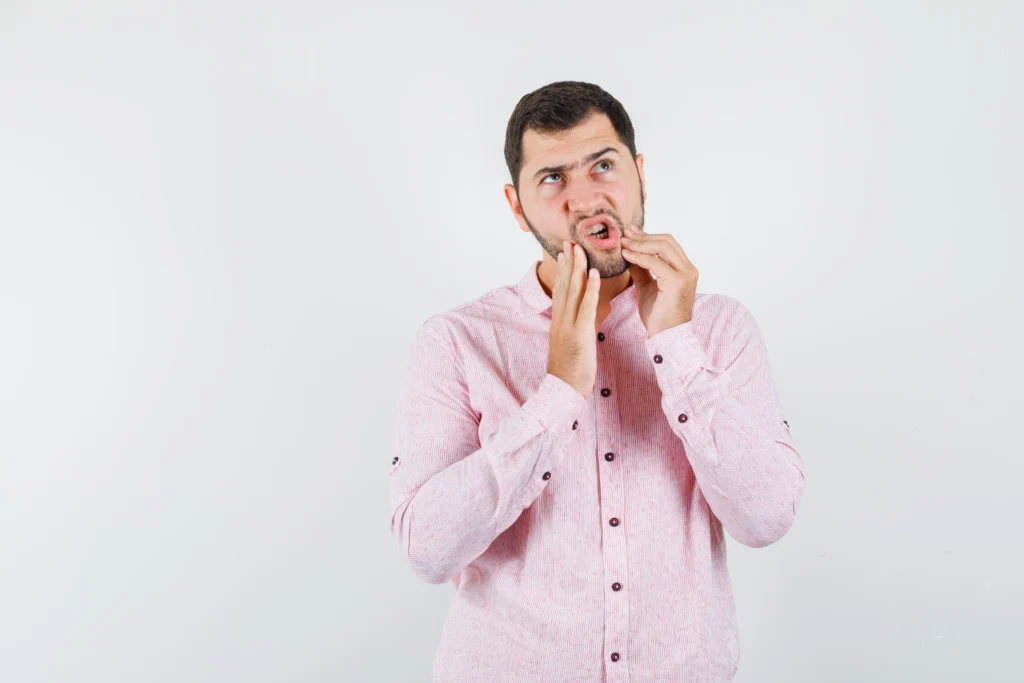
Have you lost a back tooth and found yourself chewing more on the other side? Perhaps the gap isn’t visible when you smile, so replacing it hasn’t been a priority. But even when a missing tooth doesn’t cause immediate discomfort, it can change how the surrounding teeth, gums and jaw function over time.
Not every missing tooth needs the same treatment, and the effects of leaving a gap vary from person to person. Understanding what may happen and which replacement options are available can help you make an informed decision about your oral health.
What Happens When a Tooth Is Missing?
Your teeth work together to support biting, chewing and maintaining a balanced bite. When one is lost, the surrounding teeth may gradually respond to the additional space.
Some people notice very little change, while others may experience movement in nearby teeth, changes in how their teeth meet or difficulty chewing comfortably. Here are some possible changes to understand.
Can Nearby Teeth Move into the Gap?
The teeth beside a missing tooth may gradually lean or drift towards the empty space. This movement can affect how the teeth fit together and may create areas where food becomes trapped.
If the position of neighbouring teeth changes, cleaning around the area can also become more difficult. The extent of movement varies, so a dental assessment can help determine whether it is happening in your particular case.
Can the Opposing Tooth Move?
The tooth directly opposite the missing tooth may gradually move further out of its usual position when it no longer meets a tooth during biting. This is known as over-eruption.
Depending on the amount of movement, it may affect your bite or the available space for a future replacement. Not everyone experiences this change, but it is one of the factors a dentist may check when assessing a missing tooth.
Can Losing a Tooth Affect Your Jawbone?
The jawbone surrounding your teeth is supported by the presence of natural tooth roots and the forces transmitted during everyday function.
After a tooth is removed, the bone supporting it can gradually reduce in volume as the area heals and remodels. The amount of change differs between individuals and depends on factors such as the original tooth condition, the extraction site and healing.
This matters when considering future tooth replacement. If there has been significant bone reduction, additional assessment or procedures such as bone grafting may sometimes be considered as part of dental implant planning.
It does not mean that everyone with a missing tooth will need a bone graft. A dentist needs to assess the site and determine what, if anything, is appropriate.
Can a Missing Tooth Affect Chewing and Everyday Oral Health?
A missing tooth, particularly one involved in chewing, may change how you bite and distribute pressure when eating. You might find yourself favouring the other side of your mouth or avoiding certain foods because they feel less comfortable to chew.
The effect depends on which tooth is missing, how many teeth are absent and the condition of the remaining teeth.
A missing front tooth may also affect appearance or speech, while a missing back tooth may have a greater impact on chewing. Understanding these differences helps when considering whether replacement would be beneficial.
What Are Your Options for Replacing a Missing Tooth?
There is no single replacement option suitable for everyone. The choice depends on the location of the gap, the condition of neighbouring teeth and gums, available jawbone, general health, preferences and budget.
The three commonly considered options include:
| Treatment | How it works | General consideration |
| Dental implants | A titanium implant is placed in the jawbone to support a replacement tooth, usually a crown. | A fixed option that does not usually rely on neighbouring natural teeth for support. |
| Dental bridges | A replacement tooth is supported by neighbouring teeth or, in some cases, implants. | A fixed option that requires suitable supporting structures. |
| Partial dentures | A removable appliance replaces one or more missing teeth. | A removable alternative that can be considered for different patterns of tooth loss. |
Why Consider Dental Implants?
A dental implant replaces the missing tooth root with an implant placed in the jawbone, which supports a replacement crown. Unlike a conventional tooth-supported bridge, it does not usually require neighbouring teeth to support the replacement.
However, implant treatment involves surgery and requires an assessment of bone, gum health and general suitability. You can learn more about dental implant treatment at Bluewater Dental.
A bridge or partial denture may be more appropriate in other circumstances. Your dentist can explain the advantages, limitations and maintenance requirements of each option.
Should You Have a Missing Tooth Assessed?
Leaving a gap does not automatically mean you will experience complications or need more expensive treatment later. However, an assessment can help identify changes in the surrounding teeth, bite and jawbone before deciding how to proceed.
For example, if bone volume has reduced, additional procedures may sometimes be considered before an implant can be placed. Movement of neighbouring teeth may also affect the space available for replacement.
This does not mean you need to rush into treatment. It means understanding your current oral health and the available options before making a decision.
Explore Tooth Replacement Options at Bluewater Dental
If you’re missing a tooth and considering replacement, Bluewater Dental provides dental implant treatment for patients in Tuggerah and across the Central Coast.
The team can assess the area, discuss your oral health and help you understand the tooth replacement options that may be suitable for your circumstances. Depending on your needs, these may include dental implants, bridges or dentures.
You can also explore Bluewater Dental’s services for crowns and bridges and dentures to learn more about these treatment options.
If you would like to discuss a missing tooth or understand what options may be available, contact Bluewater Dental to arrange an assessment.